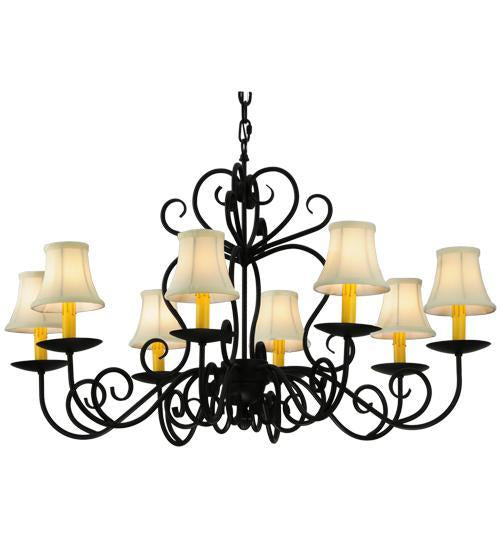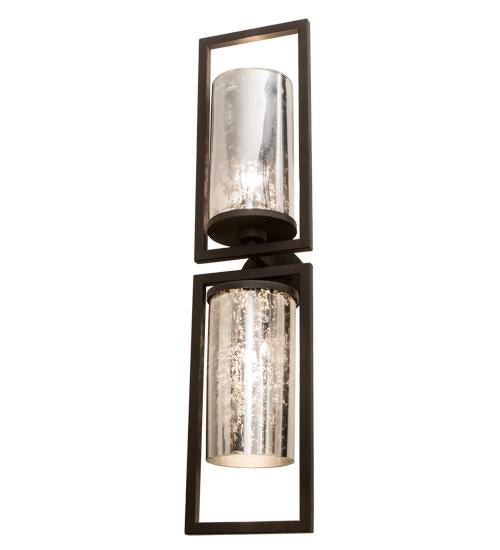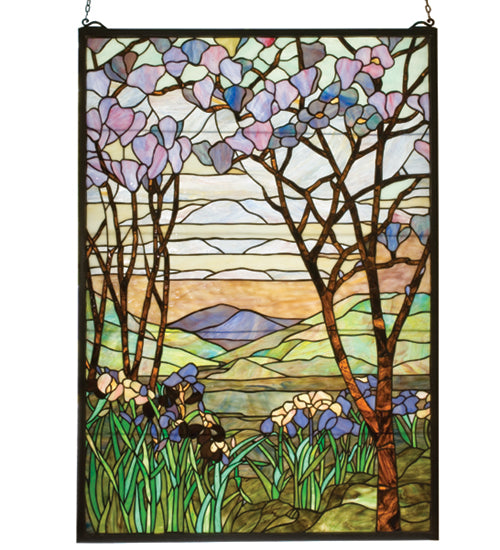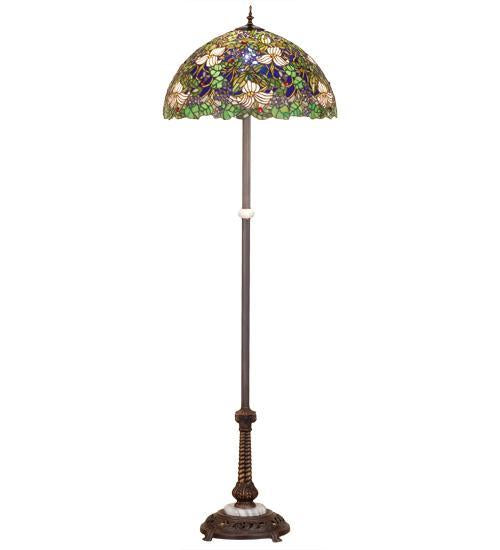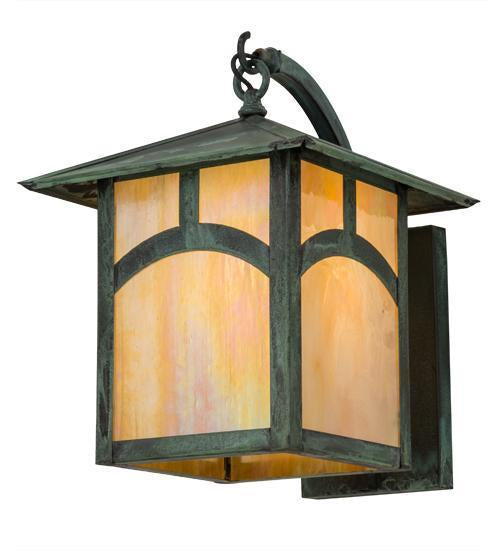

Create a balance of light between different fixtures such as Tiffany style stained glass floor lamps, torchiere floor lamps, Tiffany style lamps, Tiffany stained glass wall sconces, or Tiffany hanging lamps so that the light is spread evenly and flows in between rooms.
To best layer the light sources, you first need to survey the space and determine: What are the areas where tasks will be performed? What is the focal point of the room? The room may actually require 400 Watts of total illumination (The amount of illumination that you will need is based upon this formula: Length X Width X 1.5.) but you don’t want to get that all from one fixture.
A great starting point is to consider any dark spaces in your lighting scheme, in other words, start in places that need the most light. Floor lamps are usually used for task lighting. The light shines downward and is most commonly used for reading. This is where Tiffany floor lamps would fit right in. Not only do they light the dark area, but also give it a splash of color. The shades of Meyda Tiffany floor lamps allows the light to shine through casting beautiful colorful lighting.
Torchieres
Floor lamps are designed with shades that either direct the light down or up. Floor lamps torchiere cast the light upwards, and are a great addition to any decor where existing overhead lighting is not sufficient, and a more indirect light is desired. Torchieres are used as ambient lighting or mood lighting. Originally candelabras, the torchiere gives a distinct look to any room when lit. Available in the many styles and themes, a torchiere is also a decorative accessory in its own right.
Bridge Arm floor lamps are mostly used for reading or could be placed by a desk.
To learn more about floor lamps go to: Selection - Tiffany floor lamps best prices, Energy-Saving - CFL’s for stained glass lamps, Sizing and Placing - Stained glass Tiffany style floor lamps, and Use of Colors - Tiffany table lamps color, and Floor Lamps - One Easy Way to Inexpensively Change the Look of Your Room.